Your New Spot for Fresh, Fast & Hassle-Free Laundry
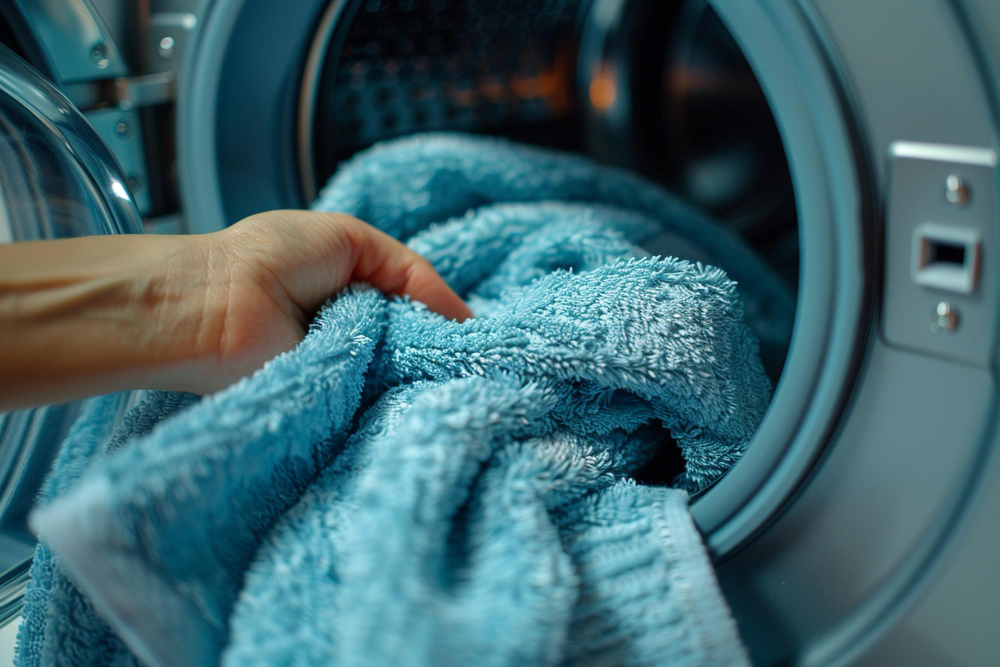
Most home washers were never built for a comforter. You can force one in, but it ends up wadded against the drum, the middle stays dirty and the detergent never fully rinses out. A large commercial washer fixes that, which is why a laundromat is usually the easiest place to wash bedding.
The process is simple, but a few small details decide whether you get a fluffy comforter or a lumpy, damp one. This guide covers what to check before you leave home, how to choose the right machine, how to run the wash, and how to dry it properly, including down comforters and weighted blankets.
Can you wash a comforter at a laundromat?
Yes, as long as the care label says it can be machine washed. A comforter needs space to move, absorb water and rinse out completely. A standard home washer rarely gives it that, but a large front-load machine at a laundromat usually does.
If the label says “dry clean only,” do not wash it yourself. Take it to a dry cleaner, because water and agitation can ruin the fabric or the filling.
Start with the care label. It lists the water temperature, the cycle and the maximum dryer heat. It always beats general advice, including this guide.
Then give the comforter a quick check:
It also helps to bring a few things with you: your own detergent, a large clean bag or basket, two or three wool dryer balls (clean tennis balls also work), and a way to pay. Many laundromats accept cards or an app, but some are still coin-only, so it is worth checking first.
Capacity is usually printed on the front of the machine, often 20, 30, 40 pounds or more. Comforters are light when dry but soak up a lot of water, so you want a machine with room to spare. As a rough guide:
These are general estimates. Fill, thickness and brand all change how much room a comforter needs, so when in doubt, pick the bigger machine.
Drying is the slow part. A synthetic comforter may take an hour or so, while a down comforter can need several rounds. That is normal.
Damp filling can develop a musty smell or even mildew within a day or two. If you are unsure, give it one more cycle.
| Type | Wash | Dry |
|---|---|---|
| Polyester or microfiber | Gentle cycle, cold or warm | Low to medium heat |
| Down or feather | Gentle cycle, mild detergent, extra rinse | Low heat with dryer balls, until fully dry (may take several cycles) |
| Cotton-filled | Gentle cycle, follow the label | Low heat, check the label for shrinkage |
| Weighted blanket | Only if the label allows machine washing | Follow the label, many should air dry |
| Electric blanket | Only per the manufacturer’s instructions | Follow the label |
| Wool | Often not machine washable, check the label | Usually air dry flat |
If your bedding is made from more delicate materials, our post on how professionals handle delicate fabrics is worth a read.
Prices vary by city and by laundromat, so there is no single number. A large washer usually costs more than a standard one, and dryers are normally charged by the time you add. With a thick or down-filled comforter, plan on at least two dryer rounds. It is a good idea to bring enough payment for the washer, an extra rinse and a longer dry, so you are not stuck halfway.
Self-service is the cheaper route if you have a couple of hours to spare. If you would rather not sit around waiting for a heavy comforter to dry, drop-off service handles the whole job for you.
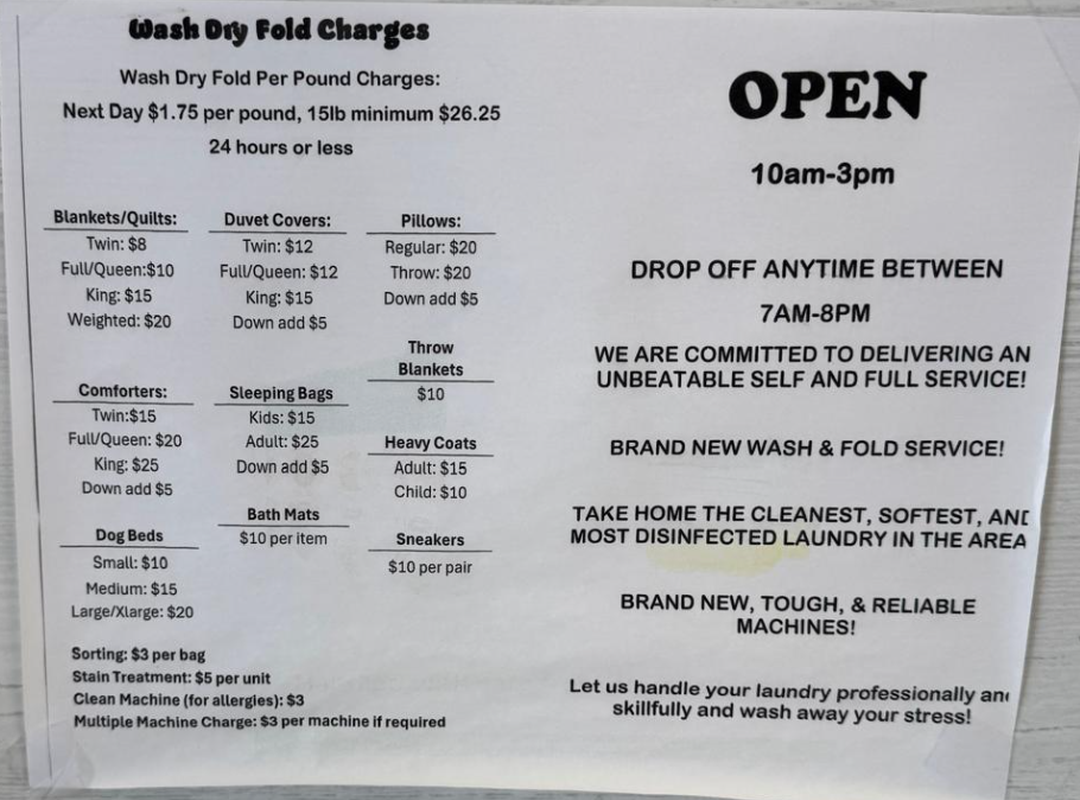
At Ark Valley Laundromat in Rocky Ford, CO, our wash, dry and fold service starts at $1.75 per pound with a $15 minimum, and standard orders are ready in 24 hours. You can see every rate on our Prices & Services page, and wash, dry and fold customers can also earn points through our rewards program. If you have a question about a specific item, contact us before you bring it in.
Can you wash a comforter at a laundromat?
Yes, as long as the care label allows machine washing. Commercial washers are bigger than home machines, so the comforter has room to move and rinse clean.
Can I wash a king size comforter at a laundromat?
Usually, yes. Look for a washer rated around 40 pounds or larger. Capacity differs from one laundromat to the next, so check the machine before you load it.
How long does it take to wash and dry a comforter?
The wash takes under an hour in most cases. Drying takes the longest, often an hour or more for synthetic fills and longer for down. Plan for about two hours in total.
Can I wash a comforter with other clothes?
It is better to wash it alone. The comforter needs space to move, and other items can snag it or leave lint on the fabric.
Can I wash a weighted blanket at a laundromat?
Only if the label says it is machine washable. Many weighted blankets are not, and the heavy filling can damage a washer or the blanket itself.
How often should you wash a comforter?
Most people wash one every few months if they use a duvet cover. Without a cover, wash it more often. Follow the label for your specific type.
What if the label says dry clean only?
Take it to a dry cleaner. Washing it yourself can ruin the fabric or the filling. You can also browse more answers on our FAQ page.